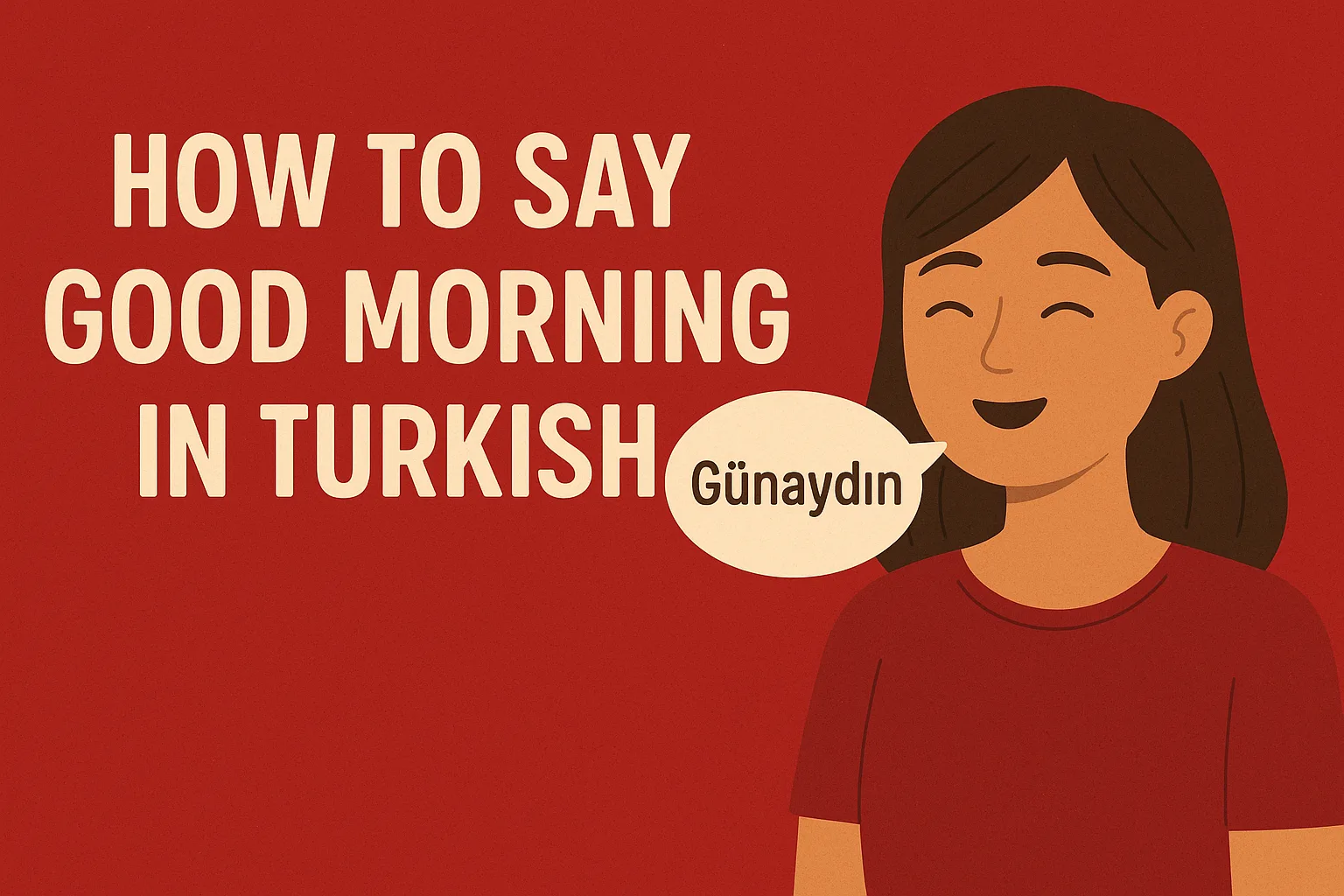
Good morning in Turkish is most commonly expressed as Günaydın. It is short, clear, and widely understood in standard Turkish. Think of it as a polite key that opens the day: one word that signals warmth, respect, and readiness to talk.
Quick Use Guide
- Say: Günaydın (good morning).
- When: from early morning until late morning (often up to around noon in everyday use).
- To Be Polite: add a title like Bey or Hanım after the name.
- Reply: repeat it back: Günaydın.
The Core Phrase: Günaydın
- Meaning: “Good morning.”
- Use: friendly, neutral, and appropriate in both daily life and professional settings.
- Literal sense: it is built from gün (day) and aydın (bright), giving the greeting a positive tone.
In writing, the ü and the ı matter. They are not decoration; they change the sound and the feel of the word.
Pronunciation Snapshot
- IPA: gyˈnajdɯn
- Syllables: gü – nay – dın
- Stress: usually on nay
Tip: Turkish is largely sound-it-out. If you learn the special letters once, reading becomes much easier.
Sounds That Make or Break It
- ü in Gün: similar to the ü in German “über” (lips rounded, tongue forward).
- ı in -dın: the Turkish dotless i is not English “i”. It is a back, unrounded vowel (short, relaxed).
- ğ (not in this word, but common): often lengthens the vowel rather than forming a strong consonant sound.
Small letters, big clarity: learning ü and ı early prevents the most common misunderstandings in Turkish pronunciation.
Useful Morning Greetings in Turkish
This set keeps you covered from casual chats to formal settings. Use the morning-specific ones early, and switch to general greetings later in the day.
| Turkish | English Meaning | Formality | Notes |
|---|---|---|---|
| Günaydın | Good morning | Neutral | Best default for morning. |
| İyi sabahlar | Good morning | Neutral | Slightly more “wish-like”; also common. |
| Hayırlı sabahlar | Have a good morning | Polite | Warm and respectful; often heard in service settings. |
| Merhaba | Hello | Universal | Works any time of day. |
| Selam | Hi | Informal | Use with friends or peers. |
When To Say Günaydın
- Morning routines: at home, in cafés, on public transport, at the office entrance.
- First contact: when you meet someone for the first time that day, Günaydın sets a respectful tone.
- Time window: it fits best in the mornig. After midday, Merhaba is a safer choice.
Professional Use
- To a colleague: Günaydın.
- To a manager: Günaydın, Ahmet Bey.
- To a client: Günaydın, Hanımefendi (very polite), or simply Günaydın if you are unsure.
How To Respond
Simple Replies
- Günaydın (mirror reply; always acceptable)
- Size de günaydın (good morning to you too; polite)
- Günaydınlar (friendly; used casually, often to a group)
Mini Dialogues
A: Günaydın!
B: Günaydın!
A: Günaydın, Elif Hanım.
B: Size de günaydın.
Politeness Notes That Sound Natural
- Bey (Mr.) and Hanım (Ms./Mrs.) usually follow the first name: Ayşe Hanım, Mehmet Bey.
- Hocam can be used respectfully for teachers, trainers, and sometimes professionals (context matters, tone matters).
- Abi and Abla are friendly terms used in everyday life, especially when addressing someone slightly older. They can sound warm when used appropriately.
Common Mistakes and Fast Fixes
- Skipping diacritics: writing gunaydin is common online, but learning Günaydın makes your Turkish look careful and modern.
- Over-Englishing ü: keep it rounded; it should not become “goo”.
- Using it late in the day: after lunch, switch to Merhaba for a clean, correct greeting.
- Flat stress: make the middle syllable a bit clearer: gü-NAy-dın.
Typing Turkish Characters
If you want your greeting to look right, keep this set handy: ç ğ ı İ ö ş ü. Many phone keyboards add them by press-and-hold on the base letter.
Practice Pack
- One-word drill: say Günaydın 10 times, slowly, keeping ü rounded and ı short.
- Upgrade drill: add a name and title: Günaydın, Ayşe Hanım.
- Switch drill: morning: Günaydın → afternoon: Merhaba.